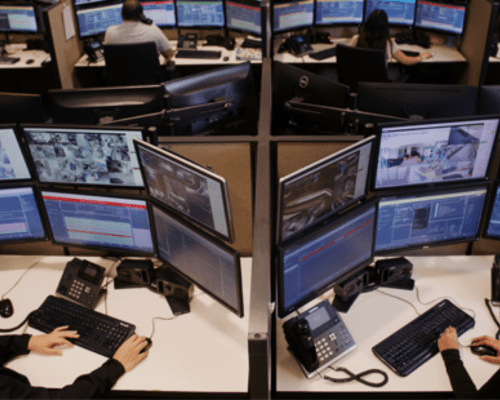
Surveillance and Monitoring
Surveillance and Monitoring refer to the systematic observation of persons, places, objects, or activities to gather information, identify threats, and provide early warning. In security, it is the continuous process of collecting and analyzing data to protect assets and people proactively. It is the "eyes and ears" of any comprehensive security plan.
Core Purpose & Objectives:
-
Proactive Threat Detection: To identify potential threats before they materialize into an incident.
-
Deterrence: The visible presence of monitoring systems can deter criminal activity.
-
Situational Awareness: Providing real-time understanding of an environment to inform decision-making.
-
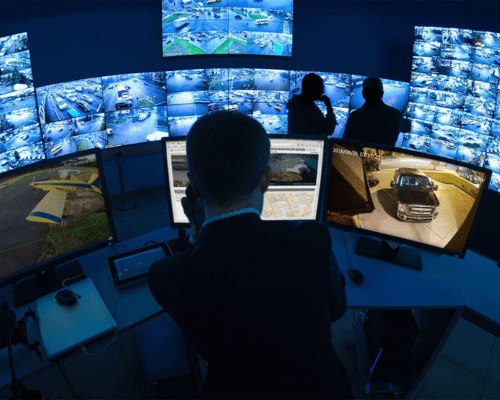
Central Command/Operations Center: A dedicated hub where all surveillance feeds and data streams are monitored in real-time by trained personnel.
-
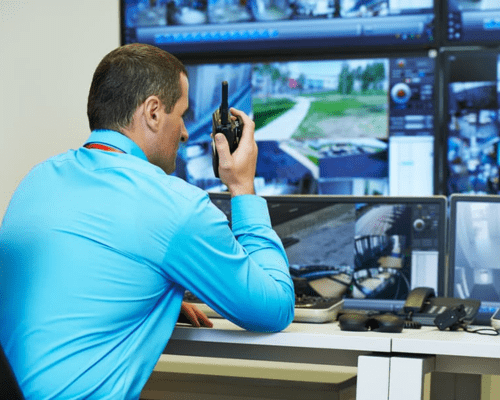
Radio Communication Monitoring: Listening to police scanners, emergency channels, or internal team communications for developing situations.
Key Types & Methods:
CCTV (Closed-Circuit Television): Video cameras transmitting a signal to a specific, limited set of monitors. Modern systems use AI for:
-
Motion Detection
-
Facial Recognition
-
License Plate Recognition (LPR/ANPR)
Physical Surveillance (Human-led):
-
Fixed-Post: Observing a specific location (e.g., a security guard in a watchtower).
-
Foot Surveillance: Following a target on foot discreetly.
-
Mobile Surveillance: Following a target using vehicles, bicycles, or public transport.
Applications in Security Services:
-
Executive Protection: Counter-surveillance to detect if a principal is being followed; monitoring routes ahead of time.
-
Residential & Corporate Security: Continuous monitoring of perimeters, access points, and sensitive areas via CCTV and sensors.